
Hello! In this post, I’ll share my practice-based research experience during Unit 1 of my MA Character Animation programme.
Coming from a graphic design and illustration background, I approached animation with a mix of confidence and uncertainty. Some concepts felt intuitive, while others proved very challenging. To illustrate my learning curve, I’ll use the bouncing ball exercise as an example.
The Bouncing Ball Exercise
Because it is a very simple, short loop that turned to be actually fun to work on, refine and look at, I redid the animation multiple times and I used it as a benchmark to track my progress throughout the year. Here’s a gif of my very first attempt:

Initially, I think I got it fairly right the very first time we did it while it as still just a literal, round ball. Then Ko talked to us about the concept of follow-through, and the next step was to add a “tail” to give the ball a sense of inertia and eventually turn it into a round character.

At first, I was quite pleased with my attempt. However, as the first deadline approached, I revisited this animation and I noticed some issues. While the general flow and motion are working, the lines were inconsistent and the movement seemed quite “jumpy” overall. Not only wanting to fix this, but also wanting to challenge myself, I added extra fins and details to the fish to make it more complex, but after the feedback session I realized that this complexity only made things more complicated for me, and at the end it hindered clarity rather than enhancing the animation.

One thing I was really struggling with was timing. Coming from an Illustration background, I think I can draw good poses, but very often I felt like I just couldn’t pull the times off right, and how and when determine when a pose is a key pose, especially when there’s a lot of subtle movements involved.
One 2D animator I really look up to is Malcolm Wope. He often posts different stages of his animation, and I noticed that he and other animators used these charts with numbers and lines, which I assumed they had something to do with the position and structuring of frames. I thought it had to be useful and it seemed like something I should be familiar with, so I decided to research them further.
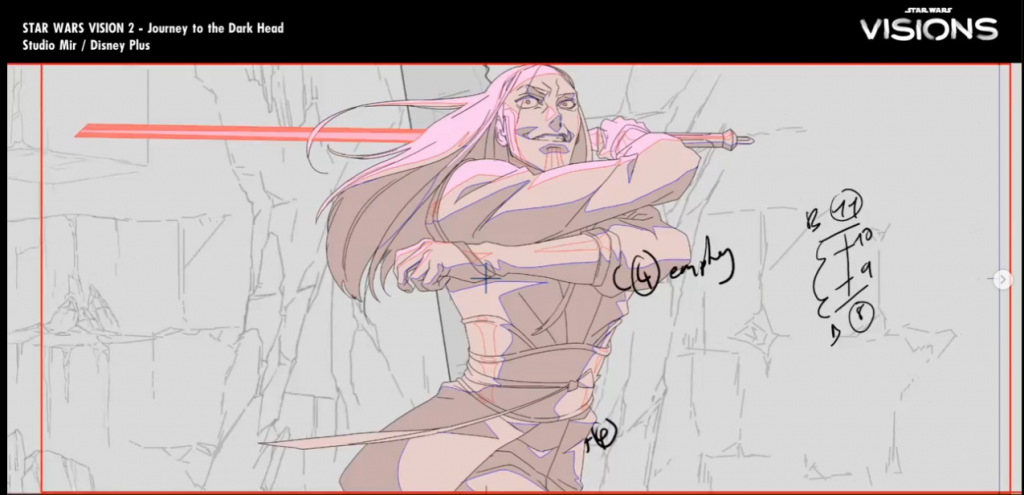
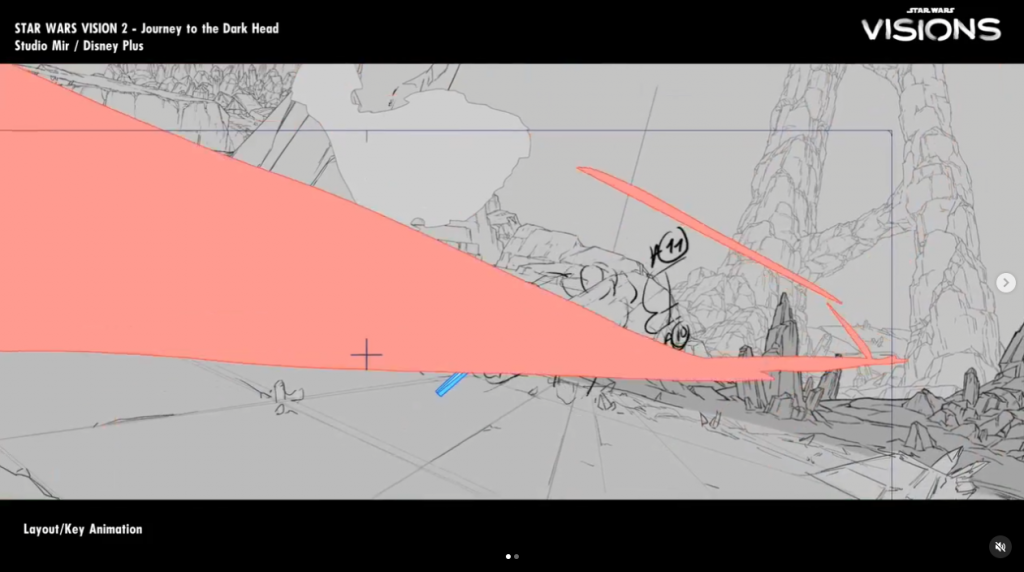
I learned that these are “timing charts”, which are a fundamental tool in traditional animation, but they still just seemed like cryptic numbers and lines that didn’t make sense to me. After some extensive research— countless hours of YouTube tutorials and studying how others do it online, I finally understood how they work, and I think this significantly improved my ability to inbetween my frames and refine timing.
After much experimentation and experiences through this and other projects, I decided to revisit the bouncing fish one more time and redo it from scratch, taking the advice given to me during the formative assessment: I simplified the design for better readability, using timing charts with halves and favouring frames to give a better sense of “anticipation and recoil”, giving it a better flow and ultimately making the movement more natural and believable.

Final Thoughts
I think there’s always room for improvement, but I am very proud and satisfied with the progress I’ve made over the past of five months. With consistent work, I believe I’ve had a very steady learning curve and I’m looking forward to apply these lessons in my future works.
Leave a Reply