
Working on my graduation film marked a clear shift in my practice, from primarily working as an independent animator, and me being responsible for both the creative and technical aspects of my work, to taking on a more directional role within a team-based production environment. This shift has fundamentally changed my understanding of animation production, particularly in relation to communication, evaluation, and maintaining creative coherence across a team.
Before assembling the team, I reviewed close to one hundred portfolios to identify artists with not only technical ability but also made sure their strengths aligned with the needs of the project. It also involved establishing a baseline level of proficiency that allowed for constructive feedback without needing to over-direct in a way that would effectively replicate doing the task myself, reinforcing an important distinction between delegation and personal execution.
This review process also provided insight into how professional animation portfolios are structured and interpreted, making it clearer that assessment is not only based on the quality of individual work, but also on how effectively artists present their material as a coherent whole, such as how much work to include, how to demonstrate range without dilution, and how to prioritise only the strongest material all significantly affect readability. Structuring a showreel clearly by project proved essential, as separating clips from the same production made it more difficult to navigate and evaluate context and individual contribution, even when strong work was present.
This emphasis on clarity directly has also informed my experience transitioning from solo production to directing others. I often rely on implicit understanding of my drawings, using shortcuts during rough animation and resolving structure during clean-up when working solo. However, this approach does not translate automatically when working with other artists. What is clear to me may not be immediately readable to someone interpreting the material for the first time. For this reason, providing feedback made me realise instructions needed to be as explicit and unambiguous as possible to minimise guesswork for collaborators, particularly in relation to clean-up and maintaining consistency in style, form, and animation intent. Rather than deliberately keeping notes open-ended, the priority was to communicate decisions in a way that could be directly executed without requiring additional clarification or assumptions from other artists.
An example of what I considered a tie-down before assembling the team:
Tie-downs after assembling the team, much more precise lines:
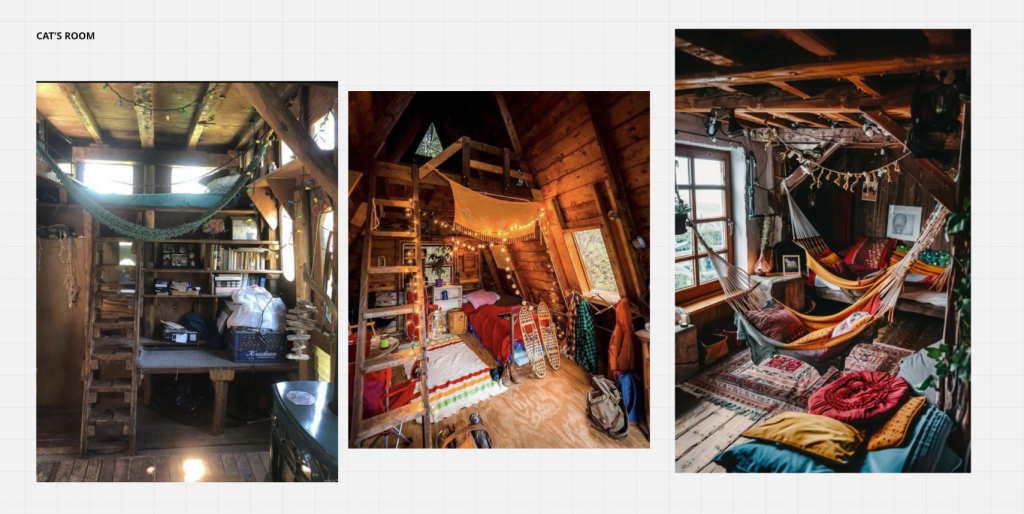
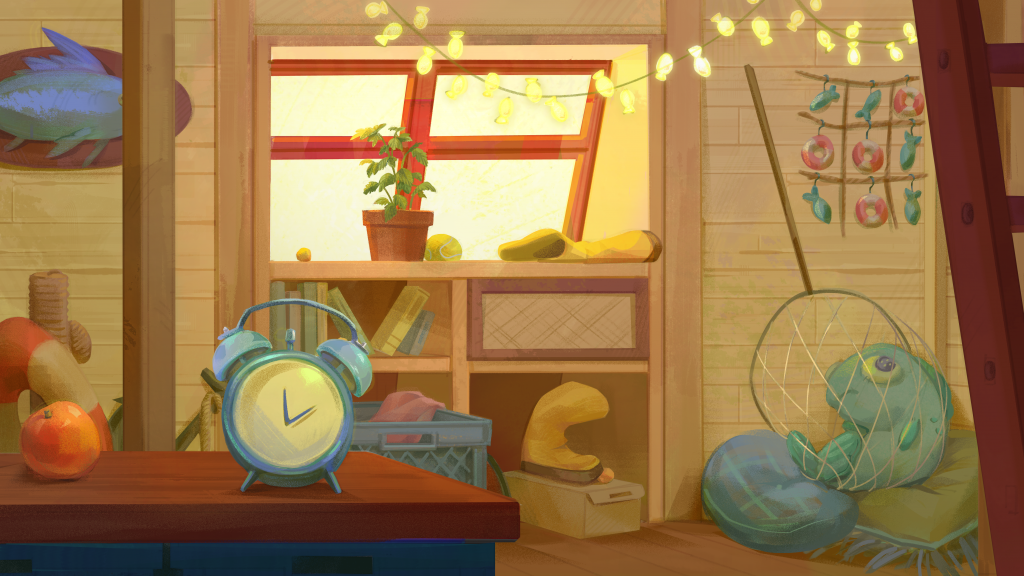
The only exception to this approach occurred in situations where I was still exploring visual direction, particularly in background design for specific environments. In these cases, instead of providing fully defined instructions, I used mood boards and visual references to communicate tone, atmosphere, and desired elements within the space. This allowed for a more exploratory stage of development while still maintaining a clear overall direction for the artwork.
While I would be interested in directing again in the future, this experience highlighted the importance of fully understanding team-based workflows before taking on a directional role. It has helped clarify my own strengths and weaknesses within a production context. I consider myself strong in execution and visual decision-making, particularly in maintaining appealing acting and ensuring that work does not become overly simplistic or “cheesy” in its aesthetic or performance. However, I have also become more aware that narrative development and structuring ideas across sequences can be more challenging for me. Recognising this balance has been valuable in identifying where I contribute most effectively within a collaborative pipeline, and where further development would be beneficial moving forward.
Leave a Reply